Package Manager Registry Contract That Bills Per Download as Enterprise Tax
Every time a developer runs npm install or pip install, a small financial transaction now occurs—one that rarely appears on a balance sheet until it does. Over the past few years, major package registries have quietly shifted from flat-rate or donation-supported models to per-download billing. The change is framed as sustainability for maintainers, but the contracts tell a different story: usage-based pricing that scales with developer activity, often with audit clauses and surprise invoices. This is the package manager registry contract that bills per download, and it is reshaping the economics of open-source consumption for enterprises, academic institutions, and even solo developers.
The Unspoken Tax on Every Download
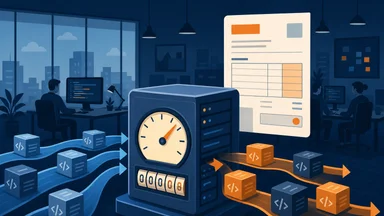
Registry contracts now meter every GET request to their servers. For npm, the public registry remains free for individuals, but enterprise customers who mirror or cache packages pay per download. PyPI's sponsors have discussed tiered pricing for commercial users. The pattern is consistent: a free tier that shrinks as usage grows, then a per-download rate that can spike unpredictably.
Consider a mid-sized engineering team of fifty developers. Each developer may run npm install dozens of times a day—fresh builds, CI pipelines, container images. A single dependency tree can pull hundreds of packages. Multiply that by fifty developers and two hundred builds per day, and the download count reaches millions per month. At a hypothetical rate of $0.0001 per download, that team could owe hundreds of dollars monthly for what was previously free.
The enterprise contracts often include a base fee plus a variable component. Some registries require customers to purchase blocks of downloads upfront, akin to mobile data plans. Others bill in arrears, leading to surprise invoices when a CI pipeline runs amok or a new project launches. The fine print typically includes an audit clause, allowing the registry to verify usage data—a provision that has already triggered disputes.
npm's 2020 acquisition by GitHub (now Microsoft) set a precedent. The public registry remained free, but GitHub Packages introduced metered storage and bandwidth. PyPI, run by the Python Software Foundation, has historically been free, but discussions about a commercial tier have intensified as infrastructure costs rise. The unspoken tax is that every download now has a potential cost, and the free tiers are narrowing.
This shift is not limited to JavaScript and Python. The Rust crate registry, crates.io, remains free for all users, but its maintainers have publicly discussed the financial burden of bandwidth costs. As of 2023, crates.io served roughly 10 billion package downloads per year, with infrastructure costs exceeding $100,000 annually. While no per-download pricing has been announced, the conversation mirrors that of npm and PyPI. The Java ecosystem, through Maven Central, has experienced similar pressures. Sonatype, which operates the Central Repository, offers commercial scanning and hosting services, but the core registry remains free. However, the infrastructure is supported by corporate sponsors, and any withdrawal of sponsorship could force a pricing model change.
How Per-Download Pricing Rewrites Open Source Economics
Open source has long operated on a gift economy: maintainers contribute code, users consume it freely, and donations or corporate sponsorships cover hosting costs. Per-download pricing introduces a direct financial link between consumption and payment, fundamentally altering that dynamic.
For maintainers, the shift offers a predictable income stream. If a popular package is downloaded millions of times per month, the maintainer could receive a share of the revenue—assuming the registry passes along a portion. Some registries, like npm's GitHub Packages, have not publicly shared revenue-sharing terms. Others, like a proposed PyPI commercial tier, might funnel proceeds back to the foundation. The promise is that the people who write the code finally get paid for its use.
But the logic cuts both ways. Large consumers—enterprises with massive CI/CD pipelines—pay proportionally more. A startup with a single developer pays pennies, while a Fortune 500 company with thousands of developers pays thousands. This mirrors AWS egress fees, where data leaving the cloud costs more than data entering it. In both cases, the pricing rewards consolidation and penalizes high-volume usage.
The tension between community ethos and vendor logic is acute. Open source was built on the principle that code should be free to run, modify, and distribute. Metered downloads treat code as a metered utility. Critics argue that this transforms open source from a commons into a toll road. Proponents counter that without sustainable funding, the commons collapses under its own weight. The debate is far from settled.
Consider the counter-argument from the perspective of a small maintainer. A developer who maintains a library with a few thousand weekly downloads currently receives no direct compensation. Under a per-download model, even a tiny fraction of a cent per download could generate a modest income. For example, a package with 10 million downloads per month at $0.00001 per download would yield $100 monthly—not life-changing, but enough to offset hosting costs or buy a coffee. The maintainer might argue that this is fairer than the current system, where corporate users benefit from free labor. However, the administrative overhead of tracking and distributing such micropayments could eat into the revenue, and there is no guarantee that registries will pass along a fair share.
The Legal Fine Print That Binds Enterprise Shops
The clickwrap agreements that govern registry usage are rarely read, but they contain clauses that can bind enterprises in unexpected ways. Most include audit rights: the registry can demand logs or access to verify download counts. Some contracts require the customer to report internal usage, including CI/CD builds that may not be publicly visible.
Usage-based billing can trigger surprise invoices when a team expands or a new project launches. A case in point: the Sidechat lawsuit, where a college social app sued a venture capital firm over allegedly shared confidential information. While not directly about registries, the case highlights how fine print in tech contracts can hide real costs. In the registry world, non-disclosure clauses often prevent customers from sharing the pricing terms, making it difficult to compare options or negotiate.
Contractual caps on internal redistribution are another trap. Many enterprise agreements limit how many times a package can be copied within an organization. If a team mirrors packages to an internal server for speed, they may exceed the allowed redistribution count. The contract may define "download" broadly, including cache hits and mirror syncs. Legal teams should scrutinize the definitions before signing.
The Georgia Institute of Technology, a public research university, encountered these issues firsthand. Student projects in computer science courses can trigger thousands of package pulls per semester. CI/CD pipelines for class assignments amplify the count. The university's IT department had to negotiate a separate educational rate after receiving an invoice that exceeded the annual budget for a lab.
Another example comes from a large financial services firm that signed a per-download contract with a major registry. The firm's internal audit revealed that its CI/CD pipeline was generating roughly 50 million downloads per month, far exceeding the initial estimate of 10 million. The registry invoked the audit clause and demanded payment for the overage, resulting in a six-figure surprise bill. The firm had to renegotiate the contract and implement caching to avoid recurrence. This case underscores the importance of understanding usage patterns before signing a metered agreement.
Case Study: Georgia Tech's Build Pipeline Under Metered Registries
Georgia Tech's College of Computing runs hundreds of courses each semester that rely on package registries. A single assignment in a machine learning class might require TensorFlow, NumPy, and a dozen smaller libraries. Each student's CI pipeline installs these dependencies fresh for every commit. With over 1,500 students in introductory courses alone, the download count can exceed 10 million per semester for a single package.
Under a per-download contract, that usage generates a significant bill. The university initially had a flat-rate agreement with a major registry, but as the contract came up for renewal, the registry proposed a metered plan. The estimated cost for the upcoming year was roughly three times the previous flat fee. Georgia Tech's IT procurement team pushed back, arguing that educational use should be exempt.
The registry eventually offered a discounted educational rate, but the experience left a sour taste. Other universities have considered private mirrors—self-hosted caches that reduce external calls. But setting up and maintaining a mirror requires infrastructure and expertise that many academic IT departments lack. The lesson for academic and nonprofit adopters is clear: negotiate educational terms before signing, and audit your actual download volume to avoid sticker shock.
The CI/CD loop amplifies costs geometrically. A single developer pushing code ten times a day triggers ten complete installs. With a team of fifty, that's five hundred installs daily. If each install pulls two hundred packages, the daily download count is one hundred thousand. Over a month, that's three million downloads. At a rate of $0.0001 per download, the monthly bill is $300—an amount that can easily go unnoticed until it accumulates.
To further illustrate, consider a hypothetical SaaS company with 200 developers, each using a CI/CD pipeline that runs 20 times per day on average. Each build might install 150 packages. That yields 200 * 20 * 150 = 600,000 downloads per day, or 18 million per month. At $0.0001 per download, the monthly bill would be $1,800. Over a year, that's $21,600—a non-trivial line item for a company that might have previously paid nothing. The company could mitigate this by caching, but the initial contract negotiation is critical.
Registry Providers' Defense: Sustainability vs. Rent-Seeking
Registry providers defend per-download pricing by pointing to infrastructure costs. Bandwidth and storage scale with users, and the largest registries serve billions of requests daily. The cost of CDN egress, server maintenance, and security scanning is real. npm alone reported serving roughly 100 billion package downloads per year as of 2023. At that scale, even a fraction of a cent per download generates substantial revenue.
But critics argue that the profit margins mirror those of cloud hyperscalers. An IEEE Spectrum analysis of cloud pricing found that egress fees often carry margins above 80%. Registry providers, many of which run on top of cloud infrastructure, may be passing through those costs with a markup. The line between sustainability and rent-seeking blurs when pricing is opaque and competitors are few.
The defense also hinges on the value delivered. A per-download fee of $0.0001 is negligible for a single install, but it adds up for high-volume users. Providers argue that the largest consumers—enterprises with thousands of developers—should pay proportionally more because they derive proportionally more value. This is the same logic that underpins tiered pricing in SaaS.
Yet the critics' counterargument is compelling: developer productivity should not be taxed at the point of code retrieval. The cost of a failed build due to a registry outage, or the time spent debugging a dependency conflict, far exceeds the download fee. Metered billing introduces friction and uncertainty into a process that was previously frictionless. The debate is not about whether infrastructure costs exist, but who should bear them and how transparently.
Another argument from providers is that per-download pricing aligns incentives: it encourages consumers to optimize their dependency trees and caching strategies, leading to more efficient use of infrastructure. This is analogous to how cloud providers argue that egress fees encourage efficient architecture. However, this assumes that the consumer has the expertise and resources to optimize, which may not be true for small teams or academic institutions. The result could be a two-tier ecosystem where well-funded enterprises can afford the tax, while smaller players are squeezed out.
Practical Escape Hatches for Teams Facing Metered Costs
Teams that want to avoid surprise registry bills have several options. The most effective is to self-host a mirror or caching proxy. Tools like Verdaccio (for npm) and devpi (for PyPI) allow organizations to cache packages locally. Subsequent installs fetch from the local cache, reducing external download counts. The initial setup takes an afternoon, and the savings can be substantial.
Caching proxies like Artifactory or Nexus can also deduplicate requests across teams. If one developer pulls a package version, subsequent pulls from other developers hit the cache. This reduces redundant downloads significantly. For CI/CD pipelines, using a local registry or a dedicated CI runner with a warm cache can cut external calls by 90% or more.
Negotiating flat-rate enterprise tiers early in the contract cycle is another strategy. Many registries offer flat-rate plans for high-volume users, but they may not advertise them. Procurement teams should ask for usage data from the registry and benchmark against competitors. If the registry refuses to disclose pricing, that is a red flag.
Auditing dependency trees for bloat can also reduce costs. Many projects include packages they barely use. Tools like npm audit or pipdeptree can identify unnecessary dependencies. Removing them reduces download counts and improves security. Finally, open-source alternatives without usage caps exist: the Python Package Index remains free for all users, though commercial tiers are under discussion. For now, it is the safest bet for cost-conscious teams.
Another emerging option is the use of decentralized or peer-to-peer package distribution. Projects like IPFS-based registries or the use of content-addressable storage could reduce reliance on centralized registries. However, these technologies are still experimental and may not be production-ready for enterprise use. A more immediate solution is to combine caching with a flat-rate contract: use the cache for routine builds and reserve direct registry access for cache misses. This hybrid approach can keep costs predictable.
For teams that cannot avoid per-download billing, monitoring usage in real time is essential. Setting up alerts when download counts exceed a threshold can prevent surprise invoices. Some registries offer dashboards with usage data, but third-party monitoring tools can provide independent verification. This is especially important if the registry's billing system is opaque or prone to errors.
The Long-Term Trajectory: Commoditization or Lock-In?
The registry market is consolidating. npm is owned by GitHub/Microsoft, PyPI is run by the Python Software Foundation, and other languages have similar centralized repositories. New entrants like Deno's registry or the Rust crate registry promise free tiers, but they face the same infrastructure costs. Over time, they may adopt similar pricing models.
Space-based data centers, touted by Elon Musk and others, are unlikely to solve this. As IEEE Spectrum reported, orbital data centers remain speculative and would introduce latency that is unacceptable for real-time package retrieval. The cost of launching and maintaining satellites far exceeds terrestrial CDN costs. The registry pricing problem is a terrestrial one, rooted in market structure and contract design.
Developer tooling is increasingly treated as a metered utility. CI/CD minutes, API calls, and now package downloads are all billed by usage. This trend mirrors the broader shift toward consumption-based pricing in cloud services. The long-term trajectory could lead to bundling: a single contract that covers registry access, CI/CD runners, and artifact storage, all metered together.
Whether this leads to commoditization or lock-in depends on competition. If multiple registries offer transparent, competitive pricing, teams can choose the cheapest option. But if consolidation continues, the market could settle on a few dominant players with opaque contracts. For now, the best defense is awareness: read the fine print, audit your usage, and explore escape hatches before the bill arrives.
One possible future is the emergence of a federated registry model, where organizations host their own registries and share packages via a common protocol. This would reduce reliance on central providers and give consumers more control over costs. However, such a model would require widespread adoption and standardization, which may take years to materialize. In the meantime, enterprises must navigate the current landscape with caution and creativity.