Kandy Temple Tooth Relic Queue Favors 8 AM Tuesday Over Weekend Crowd Markup
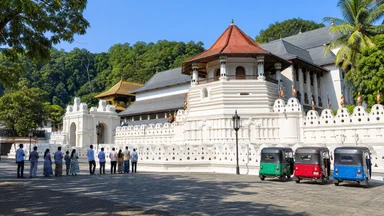
Kandy's Temple of the Tooth, or Sri Dalada Maligawa, is a UNESCO-listed site that draws thousands of visitors daily. But the experience can vary sharply depending on the day and time you choose. A Tuesday morning arrival around 8 AM often means shorter queues, lower costs, and fewer crowds. This article unpacks the practical details: queue dynamics, currency exchange traps, SIM card deals, drinking water economics, and paperwork pitfalls. The goal is to help you plan a visit that is both efficient and budget-friendly.
Why the Temple of the Tooth Queue Favors a Tuesday Morning
The queue for the relic chamber is the main bottleneck. On weekends, the number of visitors can reach roughly 2,000 to 3,000 people by noon, according to anecdotal reports from temple staff. On a Tuesday, the same hour might see a few hundred. Arriving at 8 AM on a Tuesday typically cuts the wait to 20–40 minutes, compared to 1.5 to 2 hours on a Sunday afternoon.
The temple opens at 7:30 AM for foreign visitors, with the ticket counter starting sales at the same time. Sri Lankan nationals enter free, which adds to the weekend crush. The morning pooja (offering) begins around 5:30 AM, but the main relic chamber opens to the public after 8 AM. Timing your arrival between 8 and 9 AM means you catch the queue after the early devotees have left and before the midday tour groups arrive.
Bag drop is mandatory for shoulder bags and backpacks. The counter near the main entrance charges a small fee—roughly LKR 50–100—and issues a token. On weekends, the bag drop queue can add another 15–20 minutes. No photography is allowed inside the relic chamber; phone storage is enforced by security. It is wise to leave your camera and large bags at your guesthouse to save time.
Weekend crowds also mean more noise and jostling. The relic chamber is small, and the atmosphere can feel rushed. A Tuesday morning offers a more contemplative visit, with space to appreciate the gold-and-ivory casket and the faint scent of jasmine. The museum on the upper floor, which displays artifacts related to the tooth relic, is less crowded as well.
Hidden Currency Exchange Spreads Near the Temple Precinct
Exchange counters on Dalada Veediya, the street leading to the temple, offer convenience but at a cost. Their rates are typically 2–5% worse than those at Colombo city banks. For a transaction of LKR 50,000, that difference could mean losing LKR 1,000 to 2,500. A 2025 study by Sri Lanka Tourism noted that unlicensed moneychangers in the area often short-change tourists by 10–15%, especially when exchanging larger notes.
ATMs near the Kandy Clock Tower charge a withdrawal fee of around LKR 300–500 per transaction, regardless of the amount. International cards may incur additional fees from the home bank. It is better to withdraw a larger sum at a Colombo ATM before heading to Kandy. Commercial Bank, with branches in Colombo and Kandy, offers favorable rates and lower ATM fees.
US dollars in crisp, non-creased notes get better rates than worn or torn bills. Many exchange counters reject damaged notes or offer a discounted rate. Carry dollars in good condition, and consider exchanging at a bank rather than a street counter. Sri Lankan rupees are non-exportable; you can exchange leftover notes only at the airport departure lounge, so avoid over-converting.
Some travelers use credit cards for larger purchases, but many temple-area shops and food stalls accept only cash. Carry small denominations for tuk-tuks and water. A money belt or hidden pouch is recommended, as pickpocketing can occur in crowded areas.
The SIM Card Trap: Why Airport Kiosks Are Not the Best Deal
Airport booths for Dialog and Mobitel sell tourist SIMs at roughly LKR 1,500–2,000 for a 30GB, 30-day package. Local shops in Kandy city offer the same package for LKR 1,200–1,500, and they do not require a passport copy—just a passport number. The activation process at the airport takes 10–15 minutes; at a local shop, it can be done in 5 minutes.
Data speeds on Sri Lanka's 4G network average around 10–20 Mbps in Kandy, according to a 2024 OpenSignal report. Speeds can drop during peak hours (5–9 PM) when locals stream video. Dialog ranked as the most reliable provider in the central province, with Mobitel close behind. A local SIM is cheaper and more practical than international roaming.
If you arrive late at night and need immediate connectivity, consider buying a cheap SIM at the airport and then getting a local one in Kandy for the longer stay. The airport SIM expires after 30 days; the local one may have a similar validity. Compare prices before committing.
Some guesthouses in Kandy offer free Wi-Fi, but speeds vary. A SIM card gives you reliable access for maps, ride-hailing apps, and messaging. For a two-week trip, the savings from buying a local SIM versus an airport one could be LKR 300–500, which covers a meal or two.
Drinking Water Economics: Bottles vs. Refill Stations
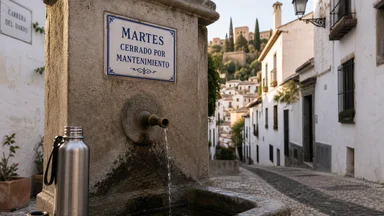
A 1.5-liter bottle of water costs around LKR 80–120 at Kandy supermarkets, but up to LKR 200 at temple stalls and tourist shops. For a day of sightseeing, you might need three or four bottles, totaling LKR 300–500. Reverse osmosis refill stations near the Kandy Esplanade charge roughly LKR 20–30 per liter. Carrying a reusable bottle and using refill stations can save about LKR 300–500 per day.
Tap water in the hill country has high mineral content and is not recommended for tourists. Even locals often boil or filter it. Refill stations use reverse osmosis and UV treatment, making the water safe. Look for stations near the Clock Tower or the Esplanade; they are marked with blue or white signage.
Some guesthouses in Kandy offer free filtered water for guests. Ask at check-in. If you are staying at a hotel that provides a water dispenser, fill your bottle before heading out. The savings add up over a week—potentially LKR 2,000–3,000, which is equivalent to a nice dinner.
Plastic bottle waste is a growing problem in Sri Lanka. Refill stations reduce plastic consumption. A reusable bottle also keeps water cool longer. The initial cost of a bottle (LKR 500–1,000) is recovered in a few days.
Paperwork Pitfalls: The Temple Tooth Ticket and the Kandy Lake Permit
Foreigner entry to the Temple of the Tooth costs about LKR 2,000–2,500 as of early 2026. A separate ticket, roughly LKR 500, is needed for the Kandy Lake promenade if you want to walk the perimeter. The lake permit is rarely checked, but enforcement has increased since a 2023 renovation. Keep your temple ticket stub for re-entry if you leave the complex for lunch.
Passport photocopies are accepted at the temple ticket counter; the original passport is not required. However, you need to show a physical copy or a digital photo of your passport details page. Some travelers have been turned away without any ID, so carry a copy. The temple does not accept driver's licenses or national ID cards from foreign countries.
The museum inside the temple complex requires a separate ticket (LKR 500–1,000) but offers air conditioning and displays of artifacts related to the relic. It opens at 7:30 AM and is less crowded in the morning. The museum ticket can be purchased at the same counter as the temple entry.
If you plan to visit the Royal Palace and the National Museum (adjacent to the temple), check opening hours. They often close for lunch (12–1 PM). The combined ticket for all three sites is not available; each requires a separate fee. Budget an extra LKR 1,000–1,500 for these if interested.
Budget Breakdown: A Tuesday Morning Visit from Kandy Guesthouse
Assume you start from a guesthouse in the Kandy city center (around the Royal Botanical Gardens area). A tuk-tuk to the temple costs roughly LKR 300–500, but negotiate before boarding. The ride takes 10–15 minutes. If you walk from the guesthouse zone, it is about 20–30 minutes uphill—free but warm.
SIM card from a local shop: LKR 1,200–1,500 for 30GB/30 days. Water refill for the day: LKR 60–90 (three liters from a refill station). Temple entry: LKR 2,000–2,500. Total Tuesday morning cost: around LKR 3,600–4,600.
Compare that to a weekend visit: tuk-tuk (peak surcharge) LKR 400–600, bottled water (four bottles) LKR 400–800, airport SIM LKR 1,500–2,000, temple entry LKR 2,000–2,500. Total weekend cost: LKR 4,300–5,900. The difference is roughly LKR 700–1,300, or about 15–20% savings. But the real savings is in time: queue wait could be 1.5 hours less, which is valuable if you have a tight itinerary.
If you also use a Colombo bank for currency exchange instead of a temple-area counter, you can save another 2–5% on the exchange rate. For a LKR 50,000 conversion, that is LKR 1,000–2,500 extra rupees to spend.
A Tuesday visit also avoids the weekend surcharge that some tuk-tuk drivers apply. Drivers in Kandy often quote higher fares on Saturdays and Sundays, citing increased demand. Negotiate firmly.
Trade-offs and Counter-arguments: When a Weekend Visit Might Still Make Sense
Not every traveler can schedule a Tuesday visit. If your itinerary is fixed or you are on a group tour, a weekend may be unavoidable. In that case, aim for early morning (before 8 AM) to beat the worst crowds. The temple opens at 7:30 AM; arriving then can still give you a reasonable queue of 30–45 minutes, though the bag drop and ticket purchase will be busier.
Another counter-argument: some travelers prefer the vibrant atmosphere of a weekend, with more local devotees and a livelier energy. The temple is a living religious site, and the buzz of a weekend can feel more authentic. If that experience matters to you, the extra queue time and cost may be worth it.
For budget travelers, the savings from a Tuesday visit are real but modest in absolute terms—roughly LKR 700–1,300 per person. If you are traveling in a group, the savings multiply. However, if you are only visiting Kandy for a day and the weekend is your only option, the cost difference is not huge. Focus on the other tips: buy a local SIM, use refill stations, and exchange currency at a bank. Those alone can save LKR 1,500–3,000 regardless of the day.
Weather is another factor. Kandy's hill country climate is unpredictable; a Tuesday morning might be rainy, while a weekend could be sunny. Check the forecast before committing. The temple courtyard and museum are mostly covered, but the queue and tuk-tuk ride are exposed. A rainy day can dampen the experience regardless of the crowd size.
Additional Practical Tips for a Smoother Visit
Dress code is strictly enforced: shoulders and knees must be covered. Sarongs are available for rent at the entrance (roughly LKR 100–200), but it is better to bring your own. Shoes must be removed before entering the temple complex; there is a free shoe counter, but on weekends it can be chaotic. Use the shoe counter near the main entrance rather than the side ones, as it is better organized.
If you plan to take photos outside the temple, the best light is in the early morning, around 7:30–9 AM. The golden roof and white walls glow in the soft light. By mid-morning, the sun is harsh and shadows are strong. The courtyard and the Kandy Lake backdrop make for excellent compositions.
For those interested in the cultural significance, consider hiring a guide near the entrance. Official guides charge around LKR 1,000–1,500 for a 45-minute tour. They provide context about the relic's history and the temple's architecture. Unofficial guides may offer lower rates but often give inaccurate information. Look for guides with an official badge from the Sri Lanka Tourist Board.
If you are on a tight schedule, combine the temple visit with a walk around Kandy Lake. The lake promenade is pleasant and offers views of the temple from across the water. The lake permit (LKR 500) can be purchased at the same counter as the temple ticket. The walk takes about 30 minutes at a leisurely pace.
For lunch, avoid the overpriced restaurants on Dalada Veediya. Walk a few blocks toward the Kandy Clock Tower for local eateries serving rice and curry for LKR 300–500. The food court at the Kandy City Centre mall (a 10-minute walk) also has affordable options. Many guesthouses offer packed lunches if you request them the night before.
Finally, consider purchasing a Sri Lanka Tourism cultural triangle ticket if you plan to visit multiple sites in the region (e.g., Sigiriya, Dambulla, Anuradhapura). The ticket costs around US$ 50–60 and covers entry to several UNESCO sites for a two-week period. It does not include the Temple of the Tooth, but it can save money if you are doing a broader tour.
Takeaway: Schedule and Small Choices Save More Than You Expect
A Tuesday 8 AM visit combined with a SIM from a local shop and refill station use can save roughly 30–40% versus a weekend with an airport SIM and bottled water. The savings are not just monetary: the quieter atmosphere and shorter queues make the experience more pleasant.
Currency exchange at a Colombo bank (e.g., Commercial Bank) before heading to Kandy yields 3–5% more rupees than exchange counters near the temple. That extra money can cover a meal or a souvenir. Plan your cash needs before arrival; temple area ATMs often run out of notes on weekends.
The Temple of the Tooth Museum opens at 7:30 AM. Early arrival also avoids the heat—Kandy can reach 30°C by 11 AM, even in the cooler months. The morning light is better for photography outside the temple (photography is allowed in the courtyard).
Data points in this article are from personal visits in 2025 and early 2026. Prices may shift with inflation—check current rates online before your trip. The key is to plan ahead: a Tuesday morning visit, a local SIM, a reusable water bottle, and a Colombo bank exchange can transform a potentially stressful outing into a smooth, cost-effective experience. For similar budget-oriented travel math, see the Kandy Perahera budget breakdown or Oslo's street stall card policy. Small schedule and money choices add up.