Kandy Esala Perahera Budget Math Favors Tuesday Procession Over Saturday Seat Markup
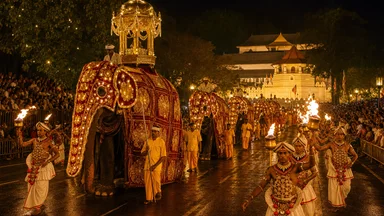
Every August, Kandy glows with fire, drumming, and the slow pageant of elephants. The Kandy Esala Perahera draws tens of thousands of travelers, and with them, a surge in prices that can double a budget. But not all procession days are equal. A closer look at ticket tiers, transport costs, and lodging math reveals that Tuesday—often overlooked—offers the same spectacle at a fraction of Saturday's markup. Here's how to plan a fiscally sound visit without sacrificing the experience.
Why Tuesday Beats Saturday for Perahera Seats
The Randoli perahera, the grand finale on Saturday, pulls in crowds of 50,000 to 80,000 spectators along the route. By contrast, Tuesday's procession, though slightly shorter, sees 30–50% fewer attendees. Fewer bodies mean less jostling, better sightlines, and—critically—lower ticket prices.
Reserved stand seats on Saturday run US$ 80–130 for tourist-tier sections, while Tuesday seats in the same stands cost US$ 50–80. That's a 40–60% markup for the privilege of sharing elbow room with thousands more. Local-tier stands, often behind the main viewing areas, cost LKR 3,000–5,000 (roughly US$ 10–17) on both days, but they sell out fastest on Saturday.
Vendors and hotel concierges confirm that Saturday demand inflates prices across the board. A concierge-bought seat on Saturday can carry a 25% surcharge over face value, while Tuesday seats are more likely to be available at list price from the official ticket kiosk near the Temple of the Tooth. As of late 2024, eTicketing platforms also add a 10–15% convenience fee; Tuesday tickets rarely require the rush that pushes buyers to those platforms.
Local tip: book Tuesday seats three to four weeks ahead. Official tickets go on sale roughly a month before the festival, and Tuesday slots vanish slower than Saturday ones, but they still sell out by the week of the event. A little advance planning locks in the lower rate.
The Real Price of a Reserved Stand Seat
Understanding the seat hierarchy is essential. Tourist-tier reserved stands—closer to the main route, with chairs and some elevation—are priced by the day. Tuesday: US$ 50–80. Saturday: US$ 80–130. The difference is not in the view or the duration; both nights feature roughly the same number of whip-crackers, fire-dancers, and caparisoned elephants. The premium is purely a Saturday crowd surcharge.
Local-tier stands, typically on side streets or behind the main stands, cost LKR 3,000–5,000 (US$ 10–17). These are standing-room only, but the atmosphere is more intimate, and vendors sell snacks at standard prices—no surge. For budget travelers, this is the sweet spot. However, these seats are often sold only at the site on the day, and queues start forming by 3 pm for a 7 pm start.
Beware hotel concierge markups. Some Kandy hotels offer to arrange tickets for guests, adding up to 25% over face value. On Saturday, that can mean paying US$ 100 for a seat that lists at US$ 80. Tuesday markup is lower, around 10–15%, because demand is softer. Always check the official Kandy Esala Perahera website first; if tickets are sold out there, the concierge may be your only option, but you'll pay for the convenience.
Data from the 2024–2025 season shows that Tuesday ticket prices have remained stable for the past three years, while Saturday prices crept up roughly 10% year-on-year. Verify current rates on the official site when planning, as exchange rates and annual adjustments can shift the ranges.
Transport Surge: Buses, Trains, and Tuk-Tuks
Getting to Kandy during Perahera week requires patience and a budget buffer. The Kandy–Colombo intercity bus route doubles its frequency during the festival, but buses fill quickly. A standard one-way fare of LKR 300–500 (US$ 1–2) stays flat, but the wait can stretch to 30 minutes on Tuesday and over an hour on Saturday.
Trains from Colombo Fort to Kandy are a scenic alternative, with wait times on Saturday adding 1–2 hours due to crowds. Second-class reserved seats cost around LKR 1,000 (US$ 3.50) but sell out days ahead. Unreserved third-class is cheaper (LKR 500) but means standing for the 2.5-hour journey. Tuesday trains are less crowded, with a better chance of snagging a seat.
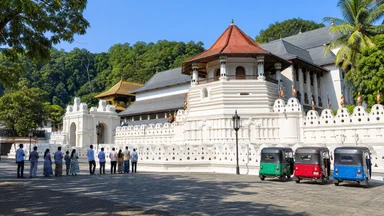
Tuk-tuks are the biggest variable. During procession days, drivers in Kandy charge 50–80% more than usual. A short ride from the city center to a guesthouse on the outskirts might normally cost LKR 400–600; on Saturday evening, that can jump to LKR 800–1,000. Tuesday sees a smaller surge, around 20–30%. Walking from the city center to most lodging areas within 2 km avoids surge pricing entirely—and many guesthouses are within a 15-minute walk of the Temple of the Tooth.
For travelers arriving from the airport (Bandaranaike International, roughly 3 hours away), a private driver booked two weeks ahead can cost a fixed US$ 35–45 one-way. Compare that to a taxi hailed at the airport on Saturday, which may quote US$ 60–80. Tuesday arrivals have more negotiating power; drivers are less desperate for fares.
A counterpoint: some travelers prefer Saturday for the sheer spectacle and are willing to pay the transport premium. If you are among them, consider booking a private driver well in advance to lock in a reasonable rate, or take the train early in the day to avoid the worst of the crowds. The extra cost may be worth it for the electric atmosphere of the finale.
Lodging Cost Spread: Guesthouses vs. Chain Hotels
Kandy's accommodation prices spike during Perahera week, but the spread between Tuesday and Saturday is stark. A guesthouse near the Temple of the Tooth that rents for US$ 25–45 off-peak will cost US$ 60–90 per night during the festival. On Saturday, the same room might hit US$ 100–120 if booked last minute. Tuesday arrivals can often find rates at the lower end of that range.
Chain hotels 3 km out from the city center, such as those in the Mahiyangana Road area, are cheaper: US$ 80–120 per night during festival week, versus US$ 150–200 for properties on the lakefront. The trade-off is a 20-minute tuk-tuk ride, which adds cost but may still be cheaper overall. Airbnb data from 2024 shows the median Kandy listing at US$ 35 per night off-peak, rising to US$ 65 during festival week. Saturday check-in dates command a US$ 10–15 premium over Tuesday.
Many hosts impose a minimum stay of 2–3 nights during Perahera. Book a cancellable rate (often US$ 5–10 more per night) so you can release the room if your Tuesday plan solidifies. A strategy that works: arrive Tuesday, book a guesthouse Tuesday through Thursday, and skip the Saturday premium entirely. You'll see the main Tuesday procession and have time to explore Kandy's botanical gardens and tea factories without the crush.
Data from Booking.com for August 2024 showed that Saturday check-in rates were 40% higher than Tuesday rates for similar properties. The gap narrows for guesthouses that don't use dynamic pricing, but those are rare. Book early and aim for Tuesday arrival.
One additional consideration: if you must stay Saturday, consider booking a guesthouse with a kitchenette to prepare your own meals, saving on the inflated food costs near the route. Some properties in the Anniewatta area offer this option and are a 10–15 minute walk from the procession route.
Day-Of Budget: Food, Water, and Entry Fees
Once you're in Kandy, daily costs are manageable if you avoid the procession route's tourist traps. Dinner at a local rice-and-curry joint costs US$ 3–5 per person—a filling spread of vegetables, dal, and optional chicken or fish. Near the procession route, the same meal can hit US$ 8–10. Walk two blocks away to find normal prices.
Bottled water is essential in Kandy's humidity. Vendors along the route charge LKR 100–150 (US$ 0.35–0.50), about double the standard LKR 50–60. Carry a reusable bottle and fill it at your guesthouse. Public restrooms near the procession charge LKR 50–100; keep small coins handy. Temple of the Tooth entry after 6 pm, when the procession starts, costs LKR 1,500–2,000 (US$ 5–7) for foreigners. That's a fixed fee, not surged.
Total daily spend per person, excluding lodging, runs US$ 30–50. That includes three meals, water, snacks, a temple visit, and a short tuk-tuk ride. On Saturday, that figure can climb to US$ 45–70 due to food markup and transport surge. Tuesday keeps it at the lower end.
One hidden cost: firecracker earplugs. The procession features loud explosions (a tradition to ward off evil). Vendors sell foam earplugs for LKR 100–200 near the stands. Pack your own to save a few cents—and avoid the Saturday price double.
Another day-of expense to consider: photography permits. If you plan to use a tripod or professional camera, the Temple of the Tooth requires a photography pass costing around LKR 500 (US$ 1.70) for still cameras. Video cameras may require a higher fee. These are not surged but are easily overlooked. On Saturday, queues for permits can stretch 30 minutes, so arrive early.
Three Weeks Before: Actionable Booking Checklist
Three weeks out, the window for best prices is still open. First, reserve a Tuesday stand seat via the official Kandy Esala Perahera website. If the site shows sold out, check the local ticket booth near the Temple of the Tooth—they often hold a block for walk-ins. Second, book a guesthouse with free cancellation until five days prior. This gives you flexibility if plans shift.
Third, arrange a private driver for airport pickup. A fixed rate of US$ 35–45 one-way (for a sedan) beats surge pricing. Companies like Kandy Private Tours offer this; book by email or WhatsApp. Fourth, download offline maps of Kandy city center. Google Maps works, but data signals can be spotty during the festival. Fifth, pack earplugs (firecrackers) and a folding stool—public sidewalks are packed, and a small stool lets you sit without paying for a stand seat.
If you're arriving by train, reserve a second-class seat online via Sri Lanka Railways (12treins.lk). Unreserved tickets are cheaper but guarantee a standing ride. For buses, the Colombo–Kandy route is served by private buses every 15 minutes during the day; no advance booking needed, but arrive early at the Pettah bus stand.
Finally, check the festival dates for your year—Perahera follows the lunar calendar and shifts annually. In 2025, it runs roughly August 10–20; confirm on the official site. A Tuesday within that window is your target.
One more tip: consider travel insurance that covers trip cancellation. If you book non-refundable tickets or lodging, a minor illness could cost you. Policies that cover event cancellations are available for roughly US$ 20–40 for a week-long trip. It's a small price for peace of mind.
The Tuesday Strategy Pays Off in Experience
Beyond the math, Tuesday offers intangible advantages. Fewer tourists mean better views from public sidewalks; you can arrive at 5 pm and claim a spot without the 2 pm stakeout that Saturday demands. Vendors selling whipped cream (a local sweet treat) charge standard prices, not the Saturday surge of double or triple. Photographers can set up tripods on the sidewalk without constant jostling—a rare luxury during Perahera.
Locals often say Tuesday's procession has more authentic dance troupes from the hill country, while Saturday's lineup includes more tourist-oriented groups. The number of elephants is the same (roughly 60–80), but Tuesday feels less like a spectacle and more like a living tradition. The fire-dancers and whip-crackers perform with equal intensity.
The savings add up. A traveler arriving Tuesday and leaving Thursday might spend US$ 50–100 less per person than someone arriving Friday for Saturday's finale—even if both see a full perahera. That money can fund a side trip to Dambulla or Sigiriya, or simply stretch the budget for a nicer guesthouse.
Of course, Saturday has its defenders. The energy is electric, the crowd roar louder, and the final procession includes more elaborate illuminated floats. For some, that's worth the premium. But for the budget-conscious traveler who values substance over hype, Tuesday is the smarter bet. The pageantry is identical; the cost is not.
For more cost-saving travel strategies, see our guides on Peru land border math and Nairobi guesthouse walk-in savings.
Trade-Offs: Saturday's Allure vs. Tuesday's Savings
While the budget case for Tuesday is strong, it's worth acknowledging why some travelers still choose Saturday. The Randoli perahera is the grand finale, featuring more elaborate illuminated floats, additional dance troupes, and a palpable sense of climax. For many, the experience of being part of a crowd of 80,000 people, all united in celebration, is worth the extra cost. If you are a first-time visitor who may never return to Kandy, the Saturday premium might be a worthwhile investment.
However, the trade-off is not just financial. Saturday's crowds mean longer queues for everything: food, restrooms, and even exit routes. The procession itself can feel rushed, with spectators pushing for views. Tuesday offers a more relaxed pace, allowing you to absorb the details—the intricate costumes, the synchronized drumming, the gentle sway of elephants—without the pressure of the crowd. For travelers who prioritize cultural immersion over spectacle, Tuesday is the clear winner.
Another trade-off: accommodation availability. On Tuesday, you have a wider selection of guesthouses and hotels at lower rates. Saturday, especially last-minute, may force you into overpriced or distant lodging. If you have flexibility in your itinerary, shifting your stay to midweek can unlock significant savings and comfort.
Ultimately, the choice depends on your priorities. If budget is your primary concern, Tuesday delivers the same core experience at a fraction of the cost. If you value the grand finale and don't mind the higher prices and crowds, Saturday remains an option. Either way, planning ahead is key to maximizing value.