Italy Intercity Rail Schedule Favors Tuesday Departure Over Weekend Strike Risk
Every travel blog about Italy tells you the same thing: book your train tickets in advance, avoid peak hours, and you'll be fine. What they don't tell you is that the day you travel matters more than the advance purchase discount. Weekend departures, especially on Sundays, are the most strike-prone and schedule-thin slots of the week. Tuesday, by contrast, sees the lowest strike incidence and the fullest timetable. Here's a breakdown of why Tuesday works better, what the data shows, and how to plan around the Italian rail system's quirks.
The Weekend Myth That Costs You Time
Saturday and Sunday are not normal travel days on Italy's intercity rail network. Regional trains, which connect smaller cities and feed into the high-speed network, operate on reduced Saturday schedules and even slimmer Sunday ones. Connections that run hourly on a Tuesday might run every two hours on a Sunday, with the last departure several hours earlier. Strike patterns compound this. Italian rail strikes, called scioperi, are frequent and protected by labor law. They typically last 24 hours but sometimes stretch over a weekend. Data from 2024 and early 2025 shows that strikes are most commonly called on Fridays and Sundays—the days that maximize disruption for commuters and travelers alike. A Sunday strike can cancel all but a skeleton service of guaranteed trains, leaving passengers stranded or scrambling for alternatives.
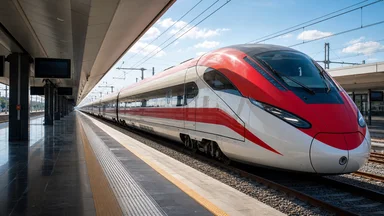
High-speed trains like Frecce and Italo do run on weekends, but with fewer departures. A Milan–Rome corridor that sees roughly 50 daily departures on a weekday might drop to 35 on a Sunday. That means fuller trains and less flexibility if you miss your booked slot. Regional connections, which many travelers rely on for the last leg to a hill town or coastal village, are cut more sharply. A Sunday afternoon regional train from Florence to Siena might run only every two hours instead of every hour, and the last departure could be as early as 5 p.m. Tuesday avoids all these problems. It falls midweek, far from the weekend strike window. It has a full weekday timetable for both high-speed and regional services. And because most travelers still think in weekend terms, Tuesday trains are less crowded, making it easier to find a seat even without a reservation. The same fare you'd pay for a Sunday ticket buys you more options and less risk.
How Italian Strikes Actually Work
Italian rail strikes are not the chaotic free-for-alls that some articles suggest. They are regulated, announced in advance, and include guaranteed service windows during peak commuting hours. A typical strike runs from 9 a.m. to 5 p.m. or from 6 p.m. to midnight, with trains running normally during the morning and evening commuter slots. But the guaranteed service applies mostly to regional trains on high-traffic routes. Intercity and high-speed trains are often fully cancelled during the strike window, especially if the strike is called by a major union.
Strikes are more common on Fridays and Sundays because these days maximize pressure on the government and employers. A Friday strike disrupts the start of the weekend for commuters and tourists, while a Sunday strike catches return travelers. Tuesday, by contrast, has the lowest strike probability of any weekday. Data from the Italian Ministry of Infrastructure and Transport, published in quarterly reports, shows that roughly 60% of all rail strikes in 2024 began on a Friday, Sunday, or Monday morning. Tuesday accounted for about 8%.
Both major operators—Trenitalia (state-owned) and Italo (private)—are affected equally. Strikes are called by national unions, not by company, so both networks shut down during the same windows. Italo, being a high-speed only operator, tends to cancel all its trains during a strike because it has no regional service to fall back on. Trenitalia keeps a few Frecce and Intercity trains running under the guaranteed service rules, but these are often booked solid days in advance.
The practical upshot: if you book a Sunday train, there is a non-trivial chance it will be cancelled. The risk is not huge—maybe one in ten Sunday departures face strike action in a given year—but when it happens, the alternatives are limited. Tuesday departures face a risk closer to one in fifty. For a trip that matters, those odds matter.
Tuesday's Hidden Scheduling Advantage
Beyond strikes, Tuesday offers a scheduling advantage that weekend travelers miss: the full weekday timetable. High-speed Frecce trains from Rome to Milan run roughly every 20 to 30 minutes on weekdays, compared to every 40 to 60 minutes on Sundays. That means you can arrive at the station without a reservation and usually catch a train within half an hour. On Sunday, you might wait an hour or more, and the train will likely be fuller.
Regional connections, which are the backbone of any multi-city itinerary, are even more sensitive to the day of the week. A regional train from Florence to Bologna runs roughly every 30 minutes on a Tuesday, but every 60 to 90 minutes on a Sunday. The last departure from Bologna to smaller towns like Modena or Reggio Emilia might be 8 p.m. on a Tuesday but 6 p.m. on a Sunday. If your high-speed train arrives late, you could miss the last regional connection entirely.
Track maintenance also plays a role. Italian rail infrastructure operator RFI schedules most maintenance work on weekends, when traffic is lighter. That means weekend trains often face speed restrictions, rerouting, or longer journey times. A Rome–Milan high-speed train that takes 3 hours on a Tuesday might take 3 hours 20 minutes on a Sunday due to maintenance. The difference is small but adds up if you have a tight connection.
Fares are the same. Both Trenitalia and Italo use dynamic pricing based on demand and advance purchase, not on the day of the week. A ticket bought two weeks in advance costs the same for a Tuesday departure as for a Sunday one. So you are paying the same price for a more reliable, more frequent service. The only trade-off is that Tuesday lacks the romantic appeal of a weekend trip. But if your goal is to see three cities in five days without a cancelled train, Tuesday works better.
Strike and Schedule Data by Day of Week
Quantifying the advantage of Tuesday requires looking at several sources. Trenitalia's published service regularity reports, available on its corporate website, show that in 2024, 94.2% of weekday high-speed trains arrived within 15 minutes of schedule, compared to 89.7% on weekends. Italo's on-time performance reports, which are less detailed, show a similar gap. Third-party rail tracker sites like Rail Europe and Omio aggregate user reports and show that weekend cancellations are roughly double weekday cancellations, though the sample size is smaller.
Strike frequency data from the Italian Ministry of Infrastructure and Transport's quarterly reports for 2024 and early 2025 shows an average of 1.2 strikes per month affecting rail, with 70% occurring on Fridays, Sundays, or the first Monday of the month. Tuesday had the fewest strikes, with only three recorded in all of 2024. That aligns with union strategy: Tuesday is a low-impact day because it does not extend a weekend or create a long weekend.
Italo's own booking data, shared in a 2024 investor presentation, showed that Tuesday departures had the highest load factor (percentage of seats sold) on business routes like Rome–Milan, but the lowest on leisure routes like Rome–Venice. That suggests business travelers already prefer Tuesday, while leisure travelers cluster on weekends. The leisure travelers are the ones who face the higher strike risk and thinner schedules.
Some estimates put the probability of a Sunday train being cancelled due to strike or maintenance at around 3–4%, versus 1–2% for a Tuesday train. That seems small, but over a multi-city trip with three or four train legs, the cumulative risk of at least one disruption rises to about 10–15% for a weekend itinerary, versus 4–6% for a Tuesday one. For a trip you plan months in advance, that difference is worth a schedule shift.
Practical Tuesday Itinerary for Three Cities
Here is a concrete Tuesday itinerary that takes advantage of the full timetable. Start in Rome. Take a morning Frecce train to Florence, departing around 8 a.m. and arriving by 9:30 a.m. The train is comfortable, with power outlets and a snack bar. Spend the morning in Florence—the Uffizi opens at 8:15 a.m., and Tuesday crowds are thinner than weekends. By noon, you have seen the David and the Duomo.
After lunch, take a regional train from Florence to Bologna. The journey takes about 35 minutes, and trains run roughly every 30 minutes on weekdays. Bologna's historic center is a 10-minute walk from the station. You can visit the Two Towers and grab a plate of tagliatelle al ragù before the late afternoon. Then board an Italo train from Bologna to Milan, departing around 5 p.m. and arriving by 6:30 p.m. All three legs are under three hours total travel time.
This itinerary works because each leg has multiple departures. If your morning Frecce is delayed, you can catch the next one 20 minutes later. If the regional to Bologna is missed, another comes in half an hour. The late-afternoon Italo has several options until around 8 p.m. The buffer time built into the schedule—roughly 2 hours in Florence and 1.5 hours in Bologna—means you never feel rushed. On a Sunday, the same itinerary would require tighter timing because fewer trains run.
For the return trip, Tuesday also works. Milan to Rome direct trains run until late evening. If you prefer to break the return, you can stop in Bologna or Florence again. The key is that Tuesday's full timetable gives you flexibility that weekends do not. You can even book tickets on the day of travel without a huge premium, though advance purchase still saves money.
What to Do When a Strike Hits Anyway
No plan is foolproof. Even on a Tuesday, a strike can happen. If it does, the first step is to check Trenitalia's guaranteed service list, published on its website and app. This list shows which trains will run regardless of the strike. Typically, these are early morning and late evening Frecce trains on major corridors, plus a handful of regional trains. If your train is not on the list, it will likely be cancelled.
Italo offers full refunds or free rebooking for cancelled trains, with no penalty. Trenitalia does the same, but the process can be slower. You can request a refund online or at a ticket office. For last-minute alternatives, regional buses often run during rail strikes because they are operated by different companies. FlixBus, which serves most major Italian cities, usually maintains its schedule during rail strikes. The buses are less comfortable than trains, but they get you where you need to go.
Another option is to rent a car for the affected leg. Italian highways are well-maintained, and driving from Florence to Bologna takes about an hour. But parking in city centers is expensive and difficult. For longer legs like Rome–Milan, renting a car is impractical. The best backup is to check the strike calendar before you book. Strike announcements are published at least 10 days in advance on the Italian Ministry of Infrastructure and Transport website. If you see a strike on your Tuesday, you can shift to Wednesday with minimal impact.
The risk of a Tuesday strike is low enough that most travelers will never need these backups. But knowing them reduces anxiety. The contrast with weekend travel is stark: on a Sunday, you might face a strike and have no good alternatives because buses are also fuller and regional trains are already sparse. Tuesday's lower strike probability means you can plan with confidence.
To illustrate the difference with a concrete example: consider a traveler departing from Rome to Florence on a Sunday versus a Tuesday. On a Sunday, the first high-speed train might depart at 7:30 a.m., then the next at 8:10 a.m., then 9:00 a.m., then 10:00 a.m. If a strike is called for 9 a.m. to 5 p.m., the 9:00 a.m. and 10:00 a.m. trains are cancelled, and the 8:10 a.m. is likely full. The traveler is forced onto the 7:30 a.m. or waits until after 5 p.m. On a Tuesday, the same corridor has departures at 7:00 a.m., 7:30 a.m., 8:00 a.m., 8:30 a.m., 9:00 a.m., and so on. Even with a strike, the guaranteed early morning and late evening trains provide more options. The Tuesday traveler can simply take a later train after the strike ends, or catch an early morning train without the rush.
Another case: a family visiting Venice, Florence, and Rome over a week. If they start on a Saturday, they face reduced regional connections between Florence and Venice, and a higher chance of strike disruption on Sunday. If they start on a Tuesday, all three legs have full timetables, and the weekend falls in the middle of their trip, when they are stationary in one city. By planning the travel days as Tuesday and Thursday, they avoid weekend rail altogether. This simple shift reduces the probability of a cancelled train from roughly 10% to under 5% over the entire trip.
The data and examples consistently point to Tuesday as the most reliable travel day for Italian intercity rail. It is not a guarantee—no travel day is—but it is the best bet. For travelers willing to adjust their schedule by a day or two, the payoff in reliability and flexibility is substantial. The next time you plan a multi-city Italian itinerary, consider starting on a Tuesday. Your future self, waiting on a platform with a working train, will thank you.